
 Call Alpharetta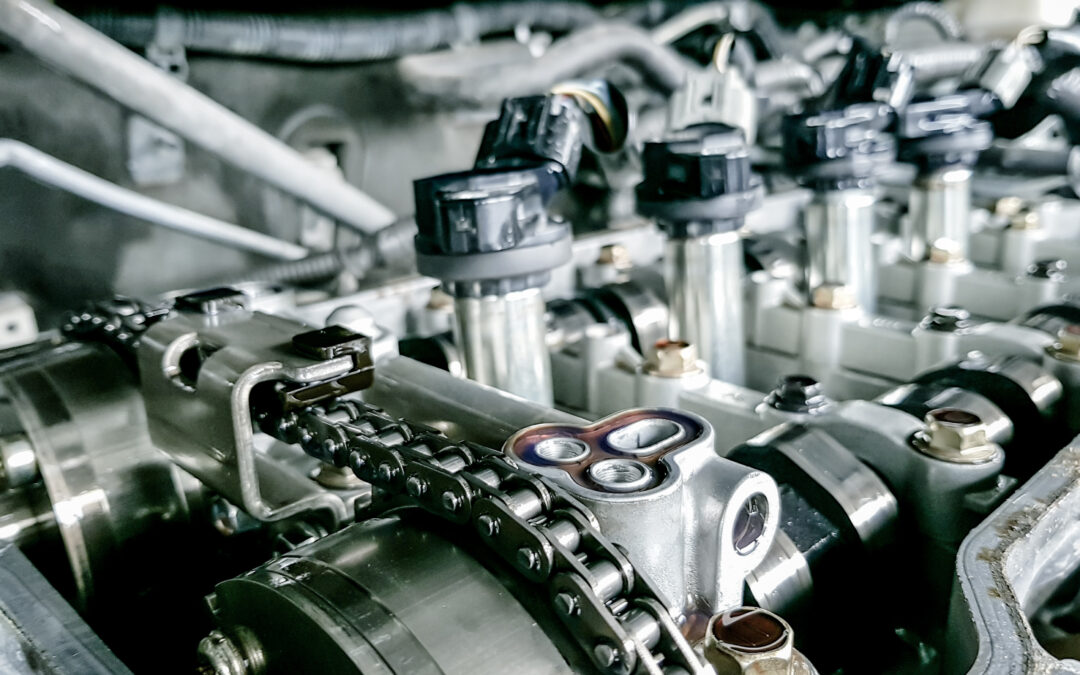
BMW Timing Chain Tensioner Problems: What Georgia Drivers Need to Know
BMW has built its reputation on precision engineering, performance, and long-term reliability. But even the best engineering has weak points — and for a significant portion of BMW’s four-cylinder lineup, the timing chain tensioner is among the most well-documented and consequential. For BMW owners across Atlanta, Alpharetta, Dunwoody, Johns Creek, and the broader Georgia metro, understanding this issue before it becomes catastrophic is the difference between a manageable repair and an engine replacement.
Solo Motorsports has been working on BMWs at the highest level since 2003. Our technicians across Georgia have seen timing chain tensioner failure at every stage — from the first faint rattle on a cold morning to complete engine failure when the warning signs are ignored for too long. Here’s everything you need to know.
Which BMW Models Are Affected
The timing chain tensioner issue is most closely associated with BMW’s N20 and N26 four-cylinder turbocharged engines, which powered a wide range of popular models from approximately 2012 through 2017. If you drive any of the following, this applies directly to you:
- BMW 320i, 328i, 428i (F30/F32 generation)
- BMW 528i (F10 generation)
- BMW X1, X3, X4 with the 2.0T four-cylinder engine
- BMW Z4 with the N20 engine
- MINI models sharing the Prince engine family also exhibit related timing chain concerns
The N20 and N26 engines use timing chain technology, which is generally more up-to-date and efficient for maintaining longevity. The problem isn’t the chain itself. It’s the tensioner that keeps the chain properly loaded, and the plastic guide rails that the chain runs against. Both components are engineered with tolerances that leave little margin for oil starvation, extended cold starts, and deferred oil changes that real-world ownership inevitably produces.
What the Timing Chain Tensioner Actually Does
In a BMW, the crankshaft is connected to the camshaft via a timing chain, which keeps the pistons’ timing in sync with the valve timing. Every combustion event depends on this synchronization being exact — off by even a few degrees and the engine runs poorly. Off by more than that, and the valves contact the pistons, causing catastrophic internal damage.
The tensioner’s job is to maintain correct chain tension at all times. Too loose and the chain slaps against its guides and jumps timing. Too tight and it accelerates wear on the chain and guides. The tensioner uses engine oil pressure to maintain the correct load, so anything that affects oil pressure or oil quality directly affects tensioner performance.
On the N20 and N26, the tensioner’s design allows it to bleed down oil pressure more quickly than ideal during cold starts and extended periods of sitting. The result is a brief window after startup — particularly on cold Georgia mornings — where the chain runs with insufficient tension and produces the characteristic rattle that BMW owners have come to recognize as the first warning sign of this issue.
Warning Signs Georgia BMW Owners Should Know
Cold-start rattle that disappears after warm-up. When your N20 and your N26 are starting to wear down, that’s when the car will start to rattle when you first start it up. You’ll hear what sounds like a chattering that comes from the front of the engine, but dies down after about one minute. This occurs because the engine is building up oil pressure to maintain the chain load, but it’s failing and banging against the chain’s guide rails.
Check engine light with camshaft position codes. The timing chain will start by stretching out, which will consequently strain the tensioner. The camshaft will then begin to indicate timing is off and trigger fault codes, such as P0011, P0012, P0014, P0016, or P0017, depending on the specific deviation and which camshaft is affected. When you go to a shop that doesn’t specialize in BMW repair, they may make the mistake of thinking the issue is that the camshaft solenoid is failing. You may need to remind them of this common oversight, or you can bring your BMW to the specialists at our Solo Motorsports auto shop to avoid mistakes when fixing it.
Rough idle or misfires. Advanced timing chain wear causes inconsistent valve timing, which manifests as a rough idle, hesitation under acceleration, or misfires that don’t respond to spark plug or ignition coil replacement. If your BMW’s idle has become noticeably rougher and basic ignition service hasn’t resolved it, timing chain wear is a serious candidate.
Reduced power and fuel economy. Timing deviation directly affects combustion efficiency. Georgia BMW owners who notice their car feeling less responsive than it used to — particularly on I-285 or GA-400 at highway speeds — and whose fuel economy has declined without explanation should have the timing system inspected.
Why This Repair Cannot Be Deferred
The plastic guide rails that the timing chain contacts during a tensioner-related rattle are not designed to absorb that impact indefinitely. Each cold start rattles the event chips and wears those guides. Eventually, a guide fails completely — and the debris enters the engine’s oil system, circulating through oil passages and accelerating wear on bearings, camshaft journals, and other precision components.
In worst-case scenarios, the chain jumps timing entirely. On the N20 and N26, this means that the valves contact the pistons. The repair cost at that point is not a timing chain replacement — it is an engine rebuild or replacement, a cost that can reach five figures on a vehicle that a timing chain service could have protected for a fraction of that amount.
Atlanta’s stop-and-go traffic — the crawl on I-85 through midtown, the daily grind on GA-400 south of Alpharetta — produces more cold start events per mile driven than highway-heavy markets. Georgia BMW owners accumulate timing chain wear faster than the national average for this reason alone.
How Solo Motorsports Diagnoses and Repairs BMW Timing Chain Issues
Accurate diagnosis is the starting point. Solo Motorsports uses BMW-compatible diagnostic equipment to read camshaft timing deviations across the full engine management system — identifying whether the timing chain, the tensioner, the guide rails, or a combination of components is responsible before any repair is recommended. This prevents the common misdiagnosis of camshaft solenoids when the chain is the actual culprit.
For BMW timing chain service, our technicians replace the tensioner, chain, and guide rails as a complete system rather than addressing individual components in isolation — because a new tensioner on a worn chain, or a new chain on worn guides, simply defers the failure rather than resolving it. We use OEM or OEM-equivalent components and verify correct camshaft timing after every repair with a post-repair scan before the vehicle is released.
Our German auto repair locations across Georgia serve BMW owners throughout Atlanta, Alpharetta, Dunwoody, Gainesville, Johns Creek, Lawrenceville, Milton, Norcross, and Roswell — with the same level of BMW-specific expertise at every location.
Frequently Asked Questions About BMW Timing Chain Problems
How much does a BMW timing chain replacement cost in Georgia?
It depends on your BMW model and which components need to be replaced, as timing chain problems can result from a variety of failing parts. We’ll ensure you receive a thorough diagnosis and an estimate before the work begins. Contact any of our auto shops to get the diagnosis done so you know exactly what you’re dealing with!
My BMW is still under warranty — does the dealer have to cover this?
BMW extended warranty coverage for timing chain components on certain N20 and N26 vehicles following widespread owner complaints. Whether your specific vehicle qualifies depends on model year, mileage, and VIN. The nice thing about working with our BMW mechanics is that we can check on the warranty to ensure everything is aligned with our shop! We’re happy to put in the extra effort to make sure you’re properly taken care of.
Can I prevent timing chain tensioner failure on my BMW?
Consistent oil changes with the correct BMW LL-01 or LL-04 specification synthetic fluid are the single most effective preventive measure. Oil quality directly affects tensioner performance. Extended oil change intervals — which BMW’s service indicator sometimes allows — increase the risk on these engines. More frequent changes than the indicator suggests are a reasonable precaution for N20 and N26 owners.
Is the timing chain rattle on startup always the tensioner?
On N20 and N26 engines, yes — a cold start rattle that clears after warmup is almost always tensioner-related. On other BMW engine families, the diagnosis may differ. Bring it to Solo Motorsports for a proper assessment rather than assuming.
Schedule Your BMW Timing Chain Inspection at Solo Motorsports
If your BMW is rattling on startup, showing camshaft-related fault codes, or simply doesn’t feel as responsive as it used to, don’t wait. Timing chain problems on the N20 and N26 are progressive — every cold start without repair accelerates wear.
Solo Motorsports’ certified auto shop has teams of technicians who specialize in BMW repair. We happily serve people throughout Georgia, with shops in Atlanta, Alpharetta, Dunwoody, Gainesville, Johns Creek, Lawrenceville, Milton, Norcross, and Roswell. Visit our site at https://solomotorsports.net or call us to schedule an appointment near you.