
 Call Alpharetta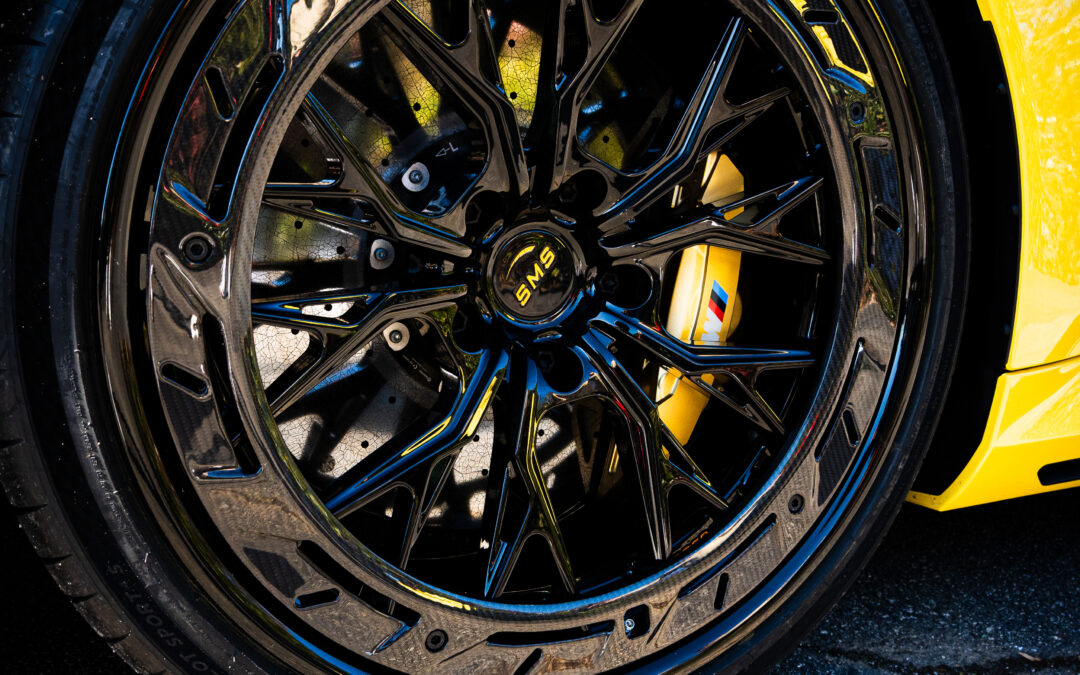
From high-performance racing to luxury show cars, custom wheels are the ultimate blend of engineering and art. While mass-produced wheels are cast in thousands, custom manufacturing focuses on precision, strength, and personalization.
Solo Motorsports has now expanded their expertise beyond world-class tuning and repair to offer full bespoke wheel manufacturing. They work directly with enthusiasts to bridge the gap between imagination and engineering, helping customers create their “perfect fantasy wheel” from the ground up.
1. The Design Phase: Turning Fantasy into Reality
The process begins with a vision. Whether you have a hand-drawn sketch or a specific aesthetic in mind, the journey starts with a deep consultation. At Solo Motorsports, this means discussing not just the look, but also the goals; be it track performance, a “slammed” show stance, or unique brake clearance for a big-brake kit.
Engineers use CAD (Computer-Aided Design) software to transform these ideas into a 3D model. Unlike factory wheels, these are engineered for a specific vehicle’s fender alignment and load rating. Before any metal is cut, the design undergoes Finite Element Analysis (FEA), a digital stress test that simulates real-world impacts to ensure the design is as safe as it is stylish.
2. Choosing the Construction
Depending on your budget and performance needs, you can choose from three primary builds:
- Monoblock (1-Piece): Carved from a single solid cylinder. These are the lightest and stiffest options, ideal for racing.
- 2-Piece: Features a separate center face and a barrel, allowing for specialized offsets.
- 3-Piece: The pinnacle of customization. With a center face, inner lip, and outer lip bolted together, you can mix and match finishes and widths with extreme precision.
3. The Forging Process
The foundation of a premium custom wheel is 6061-T6 aluminum. Rather than “casting” (pouring molten metal into a mold), custom wheels are “forged.” A solid billet of aluminum is subjected to extreme heat and up to 10,000 tons of pressure. This process creates a much denser grain structure, allowing the wheel to be significantly thinner and lighter than a cast wheel without sacrificing structural integrity.
4. CNC Machining
Once the forged “blank” is ready, it enters a CNC (Computer Numerical Control) lathe.
- Lathe Turning: The blank is spun at high speeds to create the basic round profile.
- Milling: A high-speed drill bit carves out the intricate “fantasy” design: the spokes, lug holes, and weight-reduction pockets; exactly as approved in the 3D rendering.
5. Surface Finishing
This is where the artistic vision truly comes to life. Solo Motorsports offers virtually infinite finishing options to match a customer’s specific color palette:
- Powder Coating: Durable, heat-cured colors in matte, satin, or gloss.
- Brushing & Polishing: Hand-prepped textures that highlight the natural grain of the aluminum.
- Anodizing: An electrochemical process that dyes the metal while keeping its metallic sheen.
6. Assembly and Testing
For multi-piece wheels, technicians hand-assemble the components using aerospace-grade hardware, torqued to exact specifications. Every wheel undergoes a Runout Test to ensure it is perfectly round within fractions of a millimeter, eliminating any potential for vibration.
Comparison: Custom Forged vs. Standard Cast
| Feature | Cast Wheels | Solo Motorsports Custom Forged |
| Construction | Molten Pour | Solid Forged 6061-T6 Billet |
| Strength | Standard | Extremely High (Motorsport Grade) |
| Weight | Heavier | Lightweight / Performance Optimized |
| Design | Off-the-shelf | Fully Bespoke “Fantasy” Designs |
Check out these examples of our custom SMS Wheels: